

 Adam P Rusch
 William Cope
 Jason Berg
.png "Rita van Haren") Rita van Haren
Rita van Haren Eric Patnoudes
 Maura Rodgers Brand
 Jason Williams
 Melanie Lamus
 Heather A Ochman
 May Thet Khine Nyein
e-Learning Ecologies MOOC’s Updates
Update #2: Using multiple concepts of Active Knowledge Making in the Architecture Design Education.
The key to convert the students learning model to knowledge producer rather than knowledge consumer in e-learning ecologies is the pedagogical process that is called “Active Knowledge Making” AKM. We want to allow learners more scope for agency in their learning. Here we want to suggest a recalibration of the balance agency. It’s not that students completely lacked agency in the didactic classroom—listening attentively involves a certain level of agency Active Knowledge Making as an Epistemic Dimensions of Learning has many methods of using digital media and on line resources to engage students in producing knowledge rather than acting like a consumer (Cope, Bill and Mary Kalantzis, 2009). This represents a change in direction of knowledge flows, from hierarchical, top-down knowledge flows to lateral knowledge flows and distributed model of learners as co-creators or designers of new knowledge. This aligns with the logic of contemporary, participatory media (Haythornthwaite 2009)
In Architectural Design Education, many concepts of Active Knowledge Learning are embedded with the same module of the (Architectural Design Studio). The module itself is created as a practice of Project Based Learning (PBL) concept and includes other concepts that aligned with different phases of the project.
Phases of the Architectural design process
Architectural design, same as all design processes, follows a schematic structure, which undergoes a distinct process. However, even if one design phase serves as the basis for the subsequent phases, design is not a linear process by itself. A designer typically moves back and forth across different phases (Soliman, Ashraf. 2017). Such movement allows a designer to review and modify the information collected during the programming phase to enable brainstorming of new ideas and analysis of established ideas during the schematic design phase. Consequently, ideas are enhanced based on the feedback made to the design solutions during the design development phase, while keeping in mind that these design solutions may still be modified during the construction of documents phase. In practice, these four design phases overlap with one another, as shown in Fig. 1. That is, the designer moves back and forth in between two cascaded phases to develop and enhance design information and ideas, as well as to seek solutions for and address problems (LBBA, 2012).
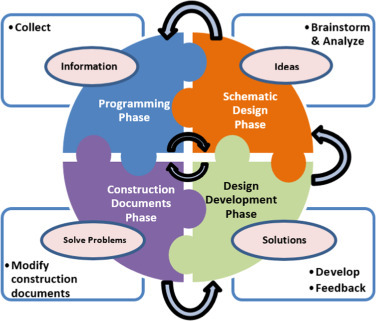
Fig. 1. Phases of the design process. Source: Author, Data: (LBBA, 2012).
Research and design in architecture
Research and design are two relatively distinct kinds of activity, although they include many similarities and some overlapping qualities (Ksenia Piatkowska,2016). Research can inform design in many ways and at many times during the design process; and the design process and the eventual design artefact can supply a multiplicity of questions that lend themselves to many forms of inquiry. (Groat and Wang. 2013). David Salmon in his analysis ascertained that design “can alternatively be understood as both a rational problem-solving technique or intuitive aesthetic act, while research can be embodied in “multiple modes inquiry” (Salmon. David, 2011).
Research-Based Learning (RBL) Phase
Since the research is an essential component of any architectural project, thus, Research-Based Learning is a main learning concept in Architectural design education. During the architectural project the students are engaged in solving a true-life problem through an active pedagogical process that has different project phases. In the first phase the students are requested to perform research that inquire them to collect data related to the problem from different online resources starting by setting criteria for trusted resources, analyzing the data to provide information that help them to move on to the next phase of creating their own responses to the problem which are in that case ( the project design).
Makerspaces in Architecture Studio
While Makerspaces concept of AKM is a huge reflection of the transition that is happening in society and changing the balance of agency, a makerspace is a place where students, architects, etc. can come together to create. We can observe clearly the raise of the makerspace as new creativity/ collaboration platform, whether it is physical design studios and workshops filled with tools, or a virtual makerspace offers software and platforms that allow people to create books, movies, and design in a reflection of how people are transitioning to active knowledge makers instead of passive recipients of knowledge.
In such context, Architecture design studio is an application of the makerspace where architecture students get to learn from their instructor, peers, and community (fig.2).

Figure 2. A theoretical framework for the process of aesthetic education (Cho, 2011:216). Culture as a multi- concept of active knowledge making. An example of the social learning environment.
References:
Cope, Bill and Mary Kalantzis, (2016), “Conceptualizing e-Learning, e-Learning Ecologies”, Routledge NY, 2016
Haythornthwaite, Caroline. 2009. "Participatory Transformations." in Ubiquitous Learning, edited by B. Cope and M. Kalantzis. Champaign IL: University of Illinois Press.
Ji Young Cho, 2013, The process of aesthetic education in design studio: A layperson's acculturation to the architecture and design community, Journal of architectural and planning research 30(4):328. Ritrived in August 1st 2020
https://www.researchgate.net/publication/285586112_The_process_of_aesthetic_education_in_design_studio_A_layperson%27s_acculturation_to_the_architecture_and_design_community
Ksenia Piatkowska, 2016, Moving Towards Competence in Teaching Architecture: The Relationship of Research and Design in Academia, Procedia Engineering, Volume 161, 2016, Pages 1476-1481, ISSN 1877-7058, https://doi.org/10.1016/j.proeng.2016.08.613. Retrieved in August 3rd from (http://www.sciencedirect.com/science/article/pii/S1877705816328429)
L. Groat, & D. Wang, 2013, Architectural research methods, Hoboken, NJ: John Wiely & Sons, INC. p25-27.
LBBA (Landon Bone Baker Architects), 2012. CAF Launches Web-Based Curriculum for High School Students. Retrieved from Landon Bone Baker Architects: http://landonbonebaker.com/2012/02/caf-launches-web-based-curriculum-for-high-school-students/〉. Google Scholar
Salomon, D. (2011). Experimental Cultures: On the "End" of the Design Thesis and the Rise of the Research Studio. Journal of Architectural Education (1984-), 65(1), 33-44. Retrieved August 3, 2020, from www.jstor.org/stable/41319217
Soliman, Ashraf. (2017). Appropriate teaching and learning strategies for the architectural design process in pedagogic design studios. Frontiers of Architectural Research. 6. 10.1016/j.foar.2017.03.002.


