

 William Cope
 Reda Sadki
 May Thet Khine Nyein
 Eugenia Arvanitis
 Pinakini Shah
 Jonathan deHaan
 Alessandra Coutinho Fernandes
 Ketan Hein
Literacy Teaching and Learning MOOC’s Updates
Section 4: Didactic Literacy Pedagogy
Didactic literacy pedagogy was the founding approach to reading and writing from the introduction of mass, compulsory, institutionalised education in the nineteenth century. It is still an approach that is widely advocated publicly and applied in schools today. A didactic approach to literacy requires learning the rules of the ways in which sounds and letters correspond. It involves learning the formal rules of what is presented as the one, correct way to write. It is about comprehension of what authors are really supposed to mean. It is about learning to respect the high cultural texts of the literary canon. Its syllabi tell you what is to be learned. Its textbooks follow the syllabi. Teachers are expected to follow the textbooks. And, if they are to score well, students have to give the right answers when it comes to the test.
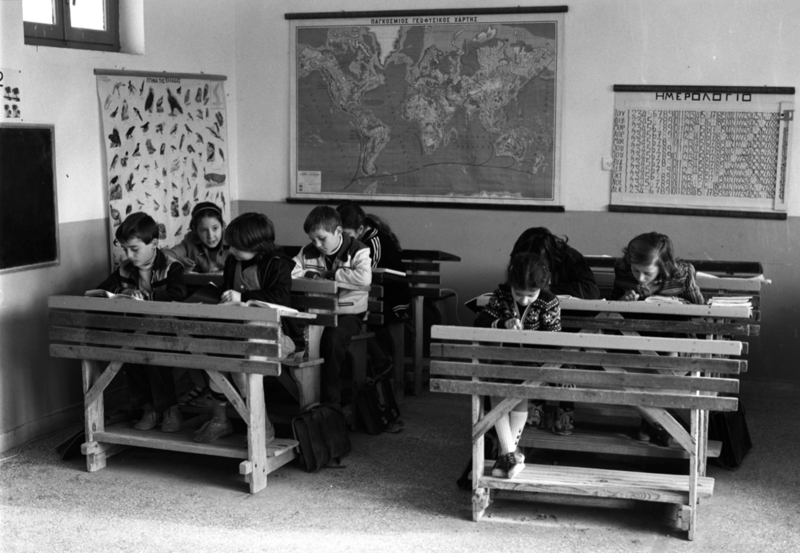
For historical examples of didactic pedagogy, see Section 4 at literacies.com. Consider also the educational apps that nowadays use didactic pedagogy—when are they valuable? When are they problematic?
Comment: What are limitations and strengths of didactic pedagogy?
Make an Update: Find an example of didactic pedagogy—either an historical example or a contemporary example such as a learning app. Briefly describe your selected example, then analyze its pedagogical strengths and limitations.



Pedagogi didaktik adalah pendekatan pengajaran yang berpusat pada guru, di mana pendidik secara langsung menyampaikan pengetahuan kepada peserta didik. Tujuannya adalah untuk secara efisien mentransfer pengetahuan yang terstruktur dan terorganisir, sering kali berfokus pada konten kurikulum.
contoh kontemporernya: aplikasi belajar Ruangguru
Ruangguru adalah platform teknologi pendidikan di Indonesia yang menawarkan berbagai layanan, terutama untuk pelajar sekolah. Layanan utamanya, ruangbelajar, menyediakan video-video yang menjelaskan materi pelajaran secara terstruktur. Setelah menonton video, siswa dapat mengerjakan soal-soal latihan untuk menguji pemahaman mereka. Metode ini menggabungkan pembelajaran mandiri dengan pendekatan didaktik yang terstruktur.
Analisis pedagogis
Kekuatan:
1. Aksesibilitas dan fleksibilitas: Mirip dengan Khan Academy, Ruangguru memungkinkan siswa untuk belajar kapan saja dan di mana saja, yang sangat penting di negara kepulauan seperti Indonesia dengan akses pendidikan yang tidak merata.
2. Materi terstruktur dan berkualitas: Konten video dibuat oleh para guru berpengalaman (sering disebut Master Teacher), memastikan materi yang disampaikan sesuai dengan kurikulum nasional dan mudah dipahami.
Penguatan melalui latihan: Setelah menyerap informasi dari video, siswa langsung diberikan latihan soal, yang membantu memperkuat pemahaman mereka. Umpan balik instan dari latihan soal ini efektif untuk mengukur penguasaan konsep dasar.
3. Motivasi melalui gamifikasi: Ruangguru menggunakan elemen gamifikasi seperti poin, peringkat, dan rewards untuk memotivasi siswa agar tetap terlibat dan menyelesaikan materi.
4. Beragam layanan: Ruangguru tidak hanya menawarkan video didaktik, tetapi juga layanan tambahan seperti les privat (ruangles), bimbingan belajar tatap muka (Brain Academy), dan fitur diskusi, yang melengkapi pendekatan didaktik dengan interaksi yang lebih personal.
Keterbatasan:
1. Dominasi pembelajaran pasif: Meskipun ada fitur latihan, format utama pembelajaran melalui video tetap bersifat pasif. Siswa menerima informasi tanpa banyak interaksi atau diskusi yang substansial, yang dapat membatasi pengembangan keterampilan berpikir kritis dan analitis yang lebih tinggi.
2. Keterbatasan dalam interaksi: Meskipun ada fitur tanya jawab, interaksi secara umum tidak sefleksibel atau sedalam diskusi kelas tatap muka. Hal ini membatasi kemampuan siswa untuk mengeksplorasi pertanyaan yang lebih kompleks atau mendapatkan penjelasan yang disesuaikan secara real-time.
3. Kurang mengakomodasi gaya belajar non-auditori/visual: Fokus pada video dan latihan soal kurang melayani siswa yang belajar paling baik melalui metode kinestetik atau kolaboratif.
4. Ketergantungan teknologi: Pengalaman belajar sangat bergantung pada kualitas koneksi internet dan perangkat siswa. Masalah koneksi dapat mengganggu alur pembelajaran dan memengaruhi efektivitas platform.
Secara ringkas, Ruangguru adalah contoh modern yang mengadopsi prinsip-prinsip pedagogi didaktik (penyampaian konten terstruktur dari ahli) dan mengemasnya secara digital. Meskipun hal ini efektif untuk menyampaikan fondasi pengetahuan dan melatih penguasaan materi dasar, platform ini memiliki keterbatasan dalam menumbuhkan keterampilan yang membutuhkan interaksi sosial dan eksplorasi yang lebih mendalam, yang merupakan karakteristik umum dari pendekatan didaktik.
The Strengths and Limitations of Didactic Pedagogy: The Case of Duolingo
Didactic pedagogy refers to a traditional, teacher-centered approach where knowledge is transmitted directly from instructor to learner. Lessons are often structured, systematic, and focused on accuracy, memorization, and mastery of foundational concepts. In contemporary education, elements of this pedagogy can still be seen in various digital learning tools, such as the language learning app Duolingo, which exemplifies both the strengths and limitations of didactic methods.
Duolingo delivers short, sequenced lessons that emphasize vocabulary, grammar, and translation drills. Learners progress through levels, receive instant feedback, and engage in repetitive practice to reinforce knowledge. These features illustrate the strengths of didactic pedagogy: it offers clarity, structure, and efficiency in transmitting basic knowledge. For beginners, this approach ensures that foundational skills—such as word recognition, syntax, and pronunciation—are developed systematically. The app’s gamified feedback system enhances motivation while maintaining the focus on correct answers and mastery of content.
However, Duolingo also exposes the limitations of didactic pedagogy. Its exercises often encourage passive learning and surface-level understanding rather than active, communicative use of language. Learners rarely engage in authentic interactions or creative language production, which limits the development of higher-order thinking and contextual fluency. Additionally, the uniform structure of lessons does not fully accommodate diverse learning styles or cultural nuances. Motivation, while initially strong due to gamification, may become dependent on external rewards rather than genuine curiosity or critical engagement.
In sum, didactic pedagogy—as reflected in Duolingo—remains effective for foundational learning and structured skill acquisition. Yet, it must be complemented by more interactive and student-centered approaches to foster deeper understanding, creativity, and real-world application. This balance between traditional instruction and contemporary, participatory pedagogy is essential for meaningful and holistic learning in today’s digital age.
When I think about didactic pedagogy, I see both strengths and limitations. One strength is that it gives structure and clarity. As a learner, I appreciate when my teacher explains lessons step by step because it helps me understand new topics more easily. For example, when I was first introduced to geometry, my teacher’s clear lecture and examples made me feel confident before moving on to harder problems. As a future educator, I know this approach can guide students well, especially when they are just starting with a subject and need a strong foundation.
But I also see the limitations. Didactic teaching can sometimes feel too one-way. As a learner, I sometimes get bored when the teacher is the only one talking and we just listen without much interaction. It makes me feel like I cannot fully express my own ideas. As someone who wants to be a teacher someday, I realize that if I rely only on lecturing, my students might not develop their creativity or critical thinking skills. They may remember the information, but they might struggle to apply it in real situations.
So for me, didactic pedagogy is useful when I need clarity and guidance, but it has to be balanced with interactive methods that allow students to explore, ask questions, and think on their own.
Didactic pedagogy, often associated with traditional teaching methods, emphasizes direct instruction, structured content delivery, and teacher-centered learning. While often contrasted with more student-centered approaches, it possesses both distinct strengths and limitations.
Didactic teaching excels at efficiently delivering a large amount of information in a structured and organized manner. The teacher, as the expert, directly transmits knowledge to the students, ensuring that key concepts and facts are covered systematically. This is particularly beneficial when introducing new topics or complex subjects where a solid foundation of knowledge is essential.
For example, In a science class, a teacher might use a didactic approach to explain the basic principles of physics, providing clear definitions, formulas, and examples. This direct instruction ensures that all students have a common understanding of the fundamental concepts before moving on to more advanced topics.
However there is a limitation like a limited student engagement. One of the main criticisms of didactic teaching is that it can be passive and lead to limited student engagement. Students may become bored or disinterested if they are simply listening to lectures or completing worksheets without actively participating in the learning process.
For example, students who are passively listening to a lecture may not be actively processing the information or making connections to their prior knowledge. This can lead to poor retention and a lack of understanding.
I think the strengths and limitations of didactic pedagogy, particularly in the context of literacy, are having a clear structure but limited interaction. Didactic pedagogy is a clear structured approach in a way that the instructions of the teacher aid students in comprehending the logical flow of a topic and its key concept. However, it has limited interaction because the opportunities for meaningful discussions or questions of the students may be constrained.
The Teacher at the Center: Understanding Traditional Educational Approaches
The Didactic pedagogy, derived from the Greek word meaning skilled at teaching, represents a traditional educational approach that places the instructor at the center of the learning process. This teacher-centered method emphasizes structured, systematic instruction designed to deliver knowledge to students in an organized manner. While modern education has evolved to include various pedagogical approaches, didactic teaching remains influential in contemporary classrooms, particularly when integrated with digital technologies and modern educational practices.
The foundation of modern didactic pedagogy can be traced to John Amos Comenius, a 17th-century Czech educator whose work The Great Didactic revolutionized educational thinking. Comenius advocated for universal education, believing that learning opportunities should be available to all people regardless of social class or background. His systematic approach emphasized progressing from simple to complex concepts, allowing students to build understanding gradually. He also recognized the importance of sensory experiences in learning, encouraging teachers to engage multiple senses rather than relying solely on verbal instruction.
This structured approach offers several educational advantages. The systematic curriculum ensures that students encounter concepts in logical sequence, preventing knowledge gaps and facilitating comprehension. The emphasis on universal access promotes educational equality and inclusivity. Additionally, the incorporation of sensory experiences makes learning more engaging and memorable than traditional lecture-based methods.
Didactic pedagogy also presents certain limitations. The teacher-centered approach can create passive learning environments where students become mere recipients of information rather than active participants in their education. This method may limit opportunities for critical thinking and student agency. As the standardized curricula can struggle to accommodate diverse cultural backgrounds and individual learning styles, potentially hindering personalized education experiences.
Comenius's educational philosophy has significantly shaped modern educational systems through its emphasis on structured learning and universal access.While this approach provides clear frameworks and systematic content delivery, its limitations in promoting student-centered learning highlight the need for balanced pedagogical strategies. Contemporary education continues to integrate elements of didactic teaching while incorporating more interactive and culturally responsive methods, creating learning environments that combine structure with engagement and inclusivity.
The Philippines, with its respective strengths and weaknesses, is a totally different setting wherein you study the didactic pedagogy in literacy. To its credit, the didactic pedagogy offers a very structured approach to teaching, which is called for in large classes, more common in public schools. The curriculum ensures that reading, writing, spelling, and grammar basics are covered, which forms the basis for such standardized tests as NATs or even international tests as PISA. It ensures cultural heritage in that the student is introduced to primer texts and the classics. It is too teacher-dependent, however, and students learn by rote memorization and complying with rules rather than truly knowing or being able to use what is being taught to them. This generates dull or drill lessons, and most students tune out. Within an environment like the Philippines, where classrooms have varied settings and mixed student backgrounds both linguistically and culturally, a strategy like this simply doesn't cut it. Aside from that, this policy sends a cold breeze at modern language interpretation, such as English or Tagalog speaking with ICT functionalities incorporated in it, and a few other local cultural forms that truly mattered today.
The organization of the didactic literacy curriculum is usually very structured and follows a step-by-step process, starting with simple rules like letters and sounds, then moving to spelling, grammar, and more complex texts. For me, this shows how traditional literacy teaching values order and control, with the teacher deciding the sequence and focus. While it helps build a clear foundation, I think it can sometimes limit creativity and student choice. That’s why I believe it works best when combined with approaches that also encourage critical thinking and self-expression.
The content focus of didactic literacy teaching is mainly on rules, structures, and correctness in language. It pays attention to things like grammar, spelling, and proper sentence construction. I think this is important because it builds discipline and accuracy in communication, but at the same time it feels limited since it focuses more on form than on meaning. For me, it shows that while this approach is helpful for learning the basics, it should be combined with other methods that allow students to apply literacy in real-life contexts.
Didactic literacy pedagogy focuses on teaching through direct instruction, where knowledge is broken down into parts like grammar rules, spelling, and formal structures. For me, this approach shows the traditional way of teaching literacy, where the teacher is the main source of knowledge and students are expected to absorb and follow. While it can help in building strong foundations, I think it also has limits because it sometimes overlooks creativity and real-life application. This made me realize that didactic pedagogy is useful for basics, but it needs to be balanced with other approaches that let students explore and express meaning in different ways.